
Oranges
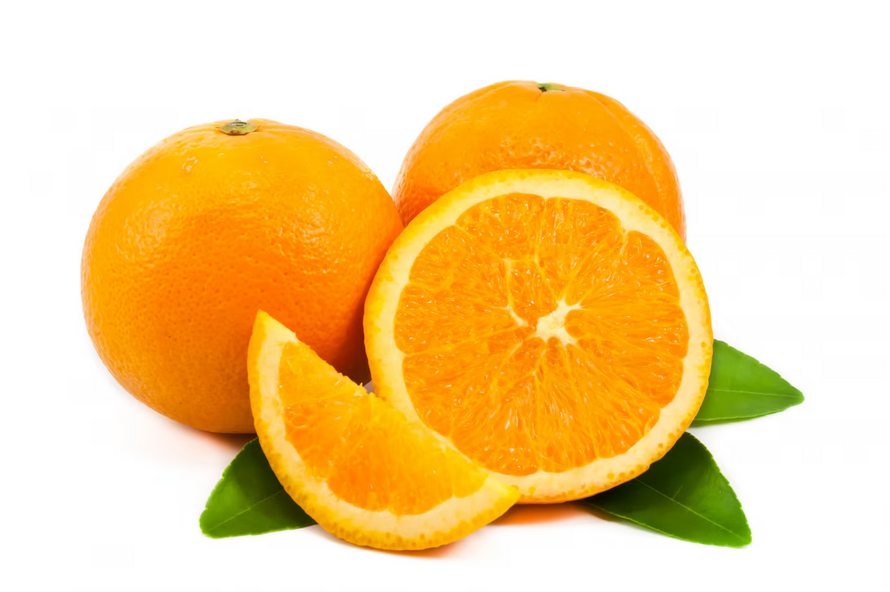
Naturally sweet, incredibly refreshing
Enjoy the authentic taste of our fresh oranges! Juicy, sweet, and packed with vitamin C, they’re the perfect way to start your day with energy. Each orange is carefully selected to offer you the best quality, freshness, and natural flavor. Whether for juice, desserts, or simply to enjoy fresh, our oranges provide a delicious and healthy experience with every bite. Come and discover the freshness that only our oranges can offer!
The Navel Lane Late orange is one of the most important orange varieties in the world, especially valued for its flavor and for being one of the latest varieties in the Navel group.
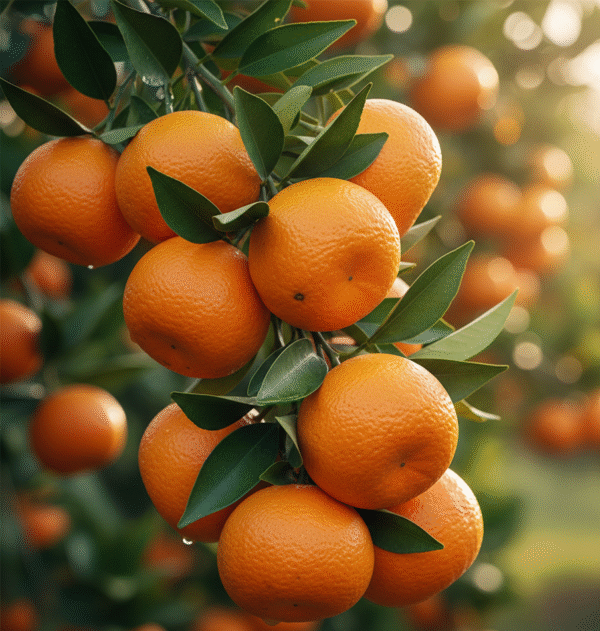
Here is a summary of its main features:
1. Origin and Group
- Varietal Group: It belongs to the Navel group (like Navelina, Washington Navel and Navelate), characterized by the small “navel” or mark at the end of the fruit.
- Origin: It is a spontaneous mutation of the popular Washington Navel variety, detected around 1950 in Australia.
- Introduction: Its commercial distribution in Spain and other citrus-growing countries intensified in the late 1980s, quickly gaining popularity.
2. Characteristics of the Fruit
- Size and Shape: The fruit is medium to large in size (about 210-240 g) and its shape is rounded.
- Skin/Crust: It is thin, smooth, and a deep orange color. Although it is easy to peel, its rind is slightly more attached than that of other early Navel varieties.
- Pulp: It has a firm and very juicy pulp. Its juice percentage is high (between 55-59%).
- Taste: It is highly appreciated for its mild, sweet and balanced flavor, with very low acidity.
- Bitterness-Free Juice: Like other late-season Navels, it has a low limonin content, ensuring that the juice does not become bitter after squeezing, making it perfect for both table and juicing.
- Seeds: It is a seedless (aprine) variety.
3. Harvest Time (Late)
- Ripening: Although it begins to acquire internal maturity in early January, its main advantage is that the fruits remain on the tree in excellent commercial condition for a long time.
- Harvest: Typically harvested between late January/February and April or even May. This ability to remain on the tree allows growers to extend the season for quality oranges.
The Lane Late is, in essence, the table and juice orange of the late winter and spring, maintaining exceptional quality when other varieties have already passed their peak.
The Navel orange is not a single variety, but a very important varietal group of oranges. They are perhaps the best known and most popular oranges for fresh consumption worldwide.
The most distinctive feature of this group, and the one that gives it its name, is the presence of a “navel” at the bottom of the fruit.
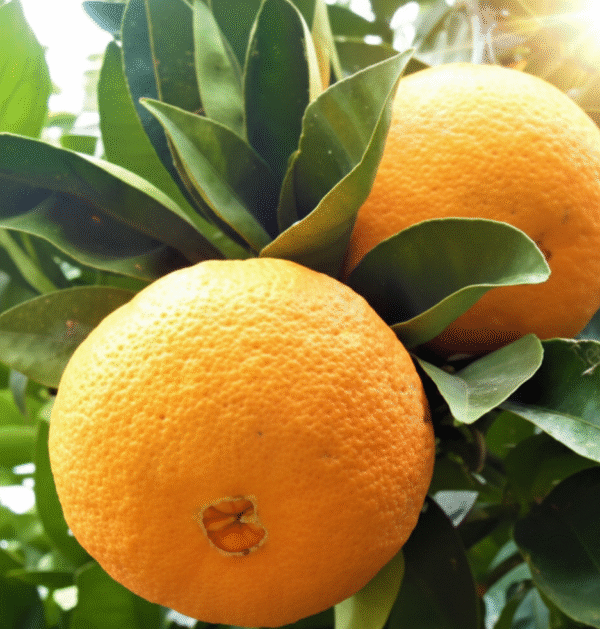
Key Characteristics of the Navel Group:
- Navel: This is the most noticeable feature. It is a secondary, rudimentary fruit that develops at the apex of the fruit and resembles a navel.
- Seedless: All varieties in the Navel group are parthenocarpic, meaning they develop fruit without pollination, so they are practically seedless (or have very few seeds). This makes them ideal for eating fresh.
- Taste: They are generally very sweet and pleasant oranges, with a balance between sugar and a light acidity.
- Peel/Bark: They usually have a deep orange rind that is easy to peel, making them the quintessential table orange.
- Uses: These are primarily table oranges due to their juicy pulp, sweetness, seedlessness, and ease of peeling. However, many varieties (such as Navelina or Lane Late) are also excellent for juicing, although their juice tends to turn bitter more quickly than that of ‘White’ oranges if left to stand, due to its limonene content.
Main Varieties of the Navel Group:
The Navel group covers the entire orange season, from the earliest to the latest:
- Navelina: (Early) It is the first to ripen, starting in late October/early November. Large fruit, slightly oval in shape and very juicy.
- Washington Navel: (Intermediate) One of the best known varieties, large in size, very sweet and juicy. Its season is from December to March.
- Navelate / Navel Lane Late: (Late) These varieties ripen later, starting in January-February, and keep very well on the tree until well into spring (April/May). They are highly valued for their excellent internal quality and are very sweet.
- Others: There are also other mutations such as ‘Newhall’, ‘Fukumoto’ (both early), or ‘CaraCara’ (which stands out for its pink pulp).
The Navelina orange is one of the most popular orange varieties and the earliest within the Navel group (navel oranges). It is highly valued both for eating fresh and for juicing.
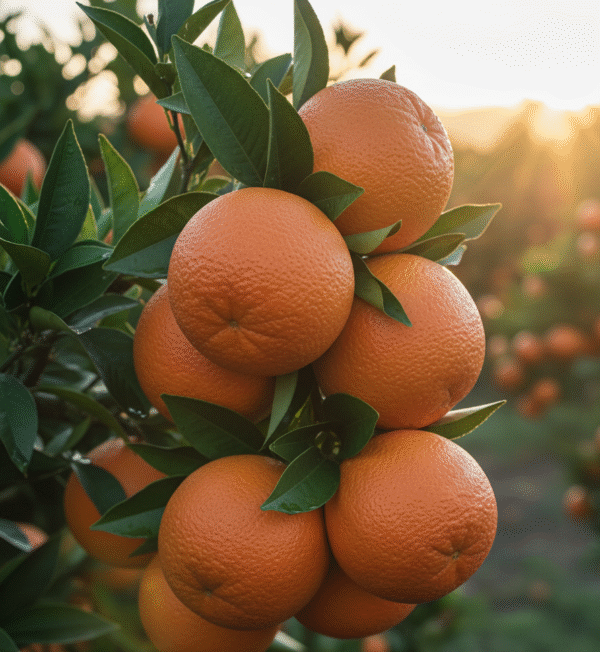
Here are its main features:
- Origin: It originated in California, USA, around 1910, as a spontaneous bud mutation of the ‘Washington Navel’ variety. It was introduced to Spain in 1933 and was named Navelina because of the size of its tree, which is somewhat smaller than that of ‘Washington Navel’.
- Group: It belongs to the Navel or navel orange group.
- Fruit:
- Size: Large.
- Shape: Rounded and slightly oval, somewhat flattened at the ends.
- Navel: It has the characteristic “navel”, although in this variety it is usually somewhat smaller and less prominent than in other Navel varieties.
- Skin/Bark: Very attractive deep orange to reddish in color, medium thickness, and easy to peel.
- Pulp: Very juicy, with a very pleasant, sweet flavor and very good quality for fresh consumption.
- Seeds: No seeds (or very few, if any).
- Tree: Medium-sized and very productive. It is known for being one of the orange varieties most resistant to cold and lime.
- Harvest Time: This is an early-season orange. It is generally harvested from late October or early November until late January or mid-February. It is the first table orange of the season.
Due to its easy peeling, large size, absence of seeds and excellent flavor, the Navelina is considered a high quality orange for direct consumption.
The Powell Navel Orange (also known as Powell Summer Navel) is a very important late orange variety, as it helps to extend the Navel group season well into the summer.
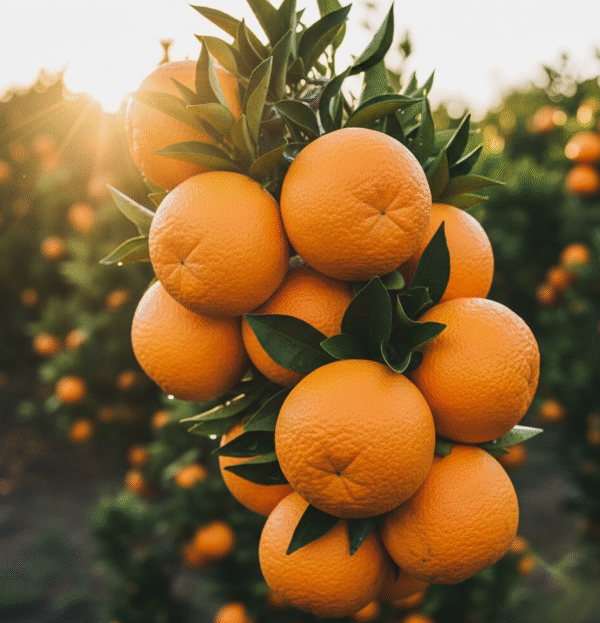
Here is a summary of its main features:
1. Origin and General Characteristics
- Varietal Group: It belongs to the Navel group (like Navelina, Washington Navel, and Navelate). Like all Navel varieties, it has the characteristic “navel” or mark at the end.
- Origin: It is a spontaneous mutation of the Washington Navel variety, discovered in Australia in 1982.
- Tree: It is vigorous and has high fruit production.
2. Characteristics of the Fruit
- Size and Shape: It is a large orange (220-250 grams) and its shape is flattened to ovoid.
- Skin/Crust: Bright orange in color, medium thickness and easy to peel (moderate adherence to the pulp).
- Pulp: The pulp is firm, with a good juice content (55-58%).
- Flavor: Its flavor is excellent, characterized by its sweetness and low acidity. It is a very pleasant orange, both for eating fresh and for juicing.
- Seeds: It is a seedless variety.
- Bitterness-Free Juice: Like other late-season Navel oranges, its juice contains low levels of limonene, the compound that causes a bitter taste shortly after juicing. This makes it perfect for juicing.
The Salustiana orange is one of the most important and prized orange varieties, especially for its high juice content of excellent quality. It belongs to the group of white or navel-less oranges.
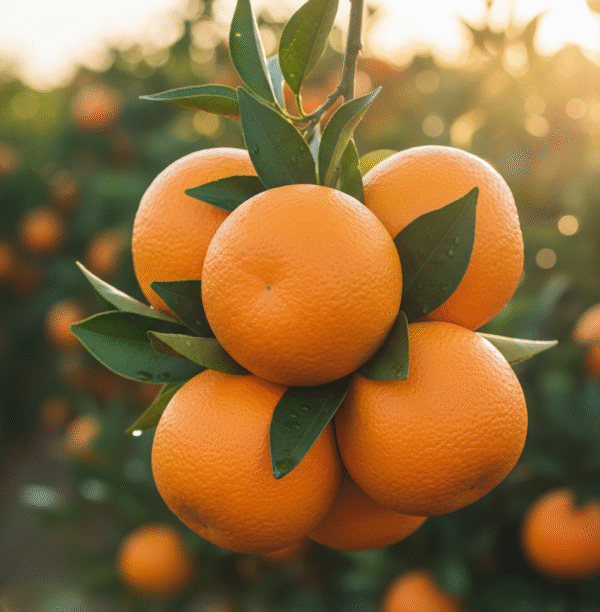
Here are its main features:
1. Origin and Identification
- Origin: It is a spontaneous mutation of the ‘Comuna’ variety, detected in the province of Valencia, Spain (some sources place it in Énova around 1891, others later, in the 1940s-50s). It is named after the farmer who discovered or selected it, Salustiano Pallás.
- Group: It belongs to the White Oranges group, which means that it does not have the characteristic “navel” that Navel group oranges (such as Navelina) have.
- Tree: Vigorous, medium to large in size, and characterized by a tendency to grow vertical branches.
2. Characteristics of the Fruit
- Shape: Round, sometimes slightly flattened (oblate).
- Size: Medium to large.
- Bark: Intense orange in color, slightly rough and of medium thickness.
- Pulp and Juice:
- Its greatest virtue is its high juice content (one of the highest on the market, around 50-55%).
- The juice is very sweet, with a mild acidity and a low limonene content. This is crucial because Salustiana juice doesn’t turn bitter quickly when squeezed, unlike Navel orange juice.
- Seeds: It is practically seedless (or has very few seeds).
- Use: It is considered the quintessential juice orange, although its sweetness and lack of seeds also make it perfectly suitable for table consumption.
3. Harvest Time
- Season: It is a mid-season orange, ripening after the Navelinas.
- Collection: Their campaign begins in mid-December and extends until March.
- Preservation: Its fruits keep very well on the tree without falling off or losing quality once the optimal ripening point is reached, which facilitates its marketing.
The Sanguinelli Orange is one of the best known and most traditional varieties of red or “blood” orange, particularly in Spain, where it originated.
It is characterized by the red pigmentation of its pulp and, often, its skin, due to the presence of anthocyanins, powerful antioxidants that develop with the low nighttime temperatures during its ripening.
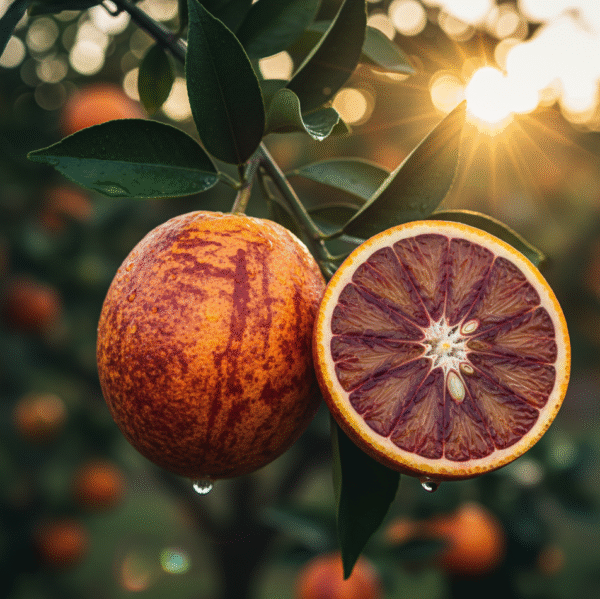
Here is a summary of its main features:
1. Origin and Group
- Varietal Group: It belongs to the Sanguina or “blood oranges” group. The most common cultivars in this group are Tarocco (Italy), Moro (the most recent), and Sanguinelli (Spain).
- Origin: It is a spontaneous mutation of the Doble Fina variety, detected in 1929 in Almenara (Castellón, Spain).
- Tree: It is of medium vigor, thornless and very productive.
2. Characteristics of the Fruit
- Size and Shape: The fruit is medium to small in size (100-130 g) and oval or ellipsoidal in shape.
- Skin/Bark: Orange in color, with patches or streaks of deep purple or red that become more visible in cold weather. The skin is thin.
- Pulp: Orange in color with streaks of deep red or “blood”. This pigmentation is distributed along the septa and the peripheral area of the segments.
- Flavor: It has a sweet and sour, intense flavor, generally with a higher acidity than a Navel orange, but with a very aromatic touch. It is very juicy.
- Juice: The juice is dark red and very aromatic, with a very low limonene content.
- Seeds: Contains few seeds (usually 2 to 4).
3. Harvest Time
- Season: It is a mid-season variety.
- Campaign: The optimal ripening period is from mid-January to the end of March.
- Uses: It is perfect for eating at the table, for making juices and is highly valued in haute cuisine for making vinaigrettes, salads and desserts, due to its unique color and flavor.


