
Kaki Persimon
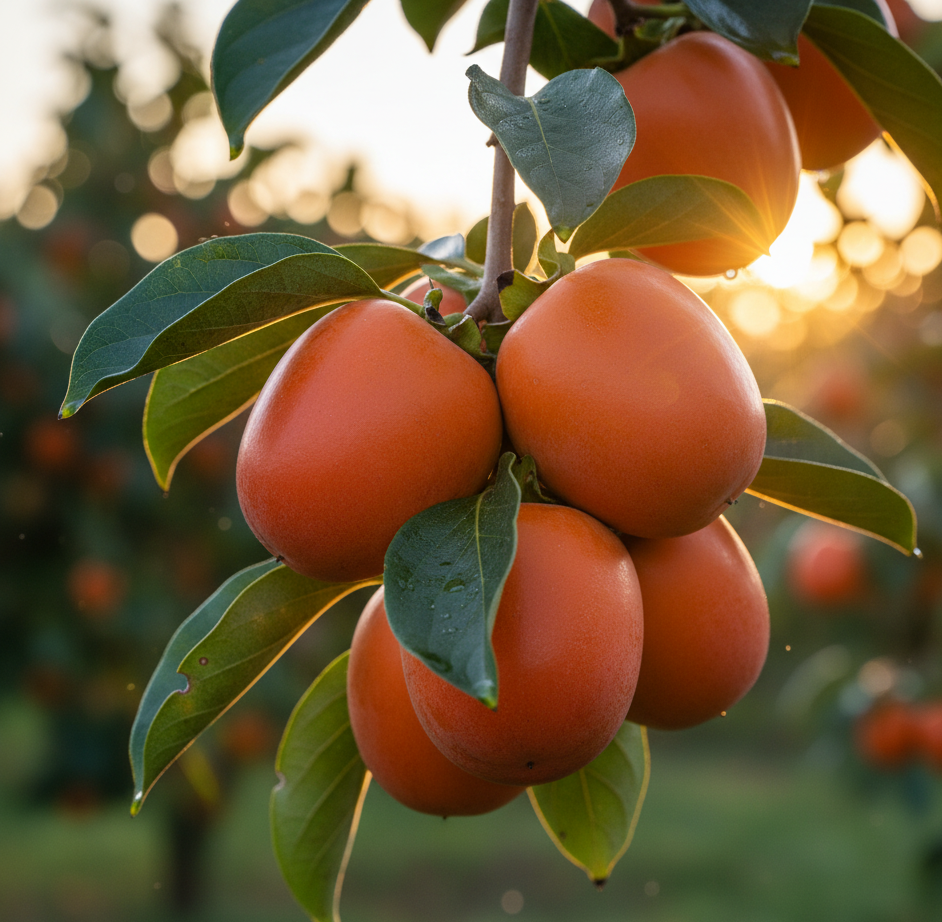
Kaki Persimon® is not a fruit variety in itself, but the commercial name registered by the Protected Designation of Origin (PDO) Kaki Ribera del Xúquer (Valencia, Spain).
This name is used to distinguish the way in which the fruit of the ‘Brilliant Red‘ variety is consumed.
Here is a detailed summary of its features:
1. The Fruit: ‘Bright Red’ Persimmon
- Origin of the Species: The tree, Diospyros kaki (persimmon or palo santo), is native to China.
- Origin of the Cultivar: The ‘Brilliant Red’ variety (the only one used for the Persimon® brand) is a spontaneous mutation of a native cultivar that emerged in the Valencian region of Ribera del Xúquer.
- Size: It is large caliber, with a slightly elongated shape.
- Color: Bright orange to reddish-orange.
2. The Key: Elimination of Astringency (Persimon®)
The ‘Brilliant Red’ persimmon is naturally astringent (leaves a rough feeling in the mouth) if eaten before it becomes extremely soft.
The Persimon® process consists of a post-harvest treatment (usually with CO2) that eliminates that astringency without the need for the fruit to soften.
- Traditional (Classic) Persimmon: Soft, gelatinous, and very sweet pulp. Eaten with a spoon.
- Kaki Persimon®: Firm, hard, and crisp flesh, similar to an apple or peach. It can be peeled and sliced.
3. Taste and Consumption
- Taste: Extremely sweet and mild, with a great aroma.
- Consistency: Firm and meaty.
- Use: Ideal for eating fresh, as a table fruit, or in salads due to its crunchy texture.
4. Harvest Time
- Season: It is an autumn and early winter fruit.
- Campaign: It is generally harvested between the beginning of October and the end of January or the beginning of February, depending on the weather.


