
Mandarins
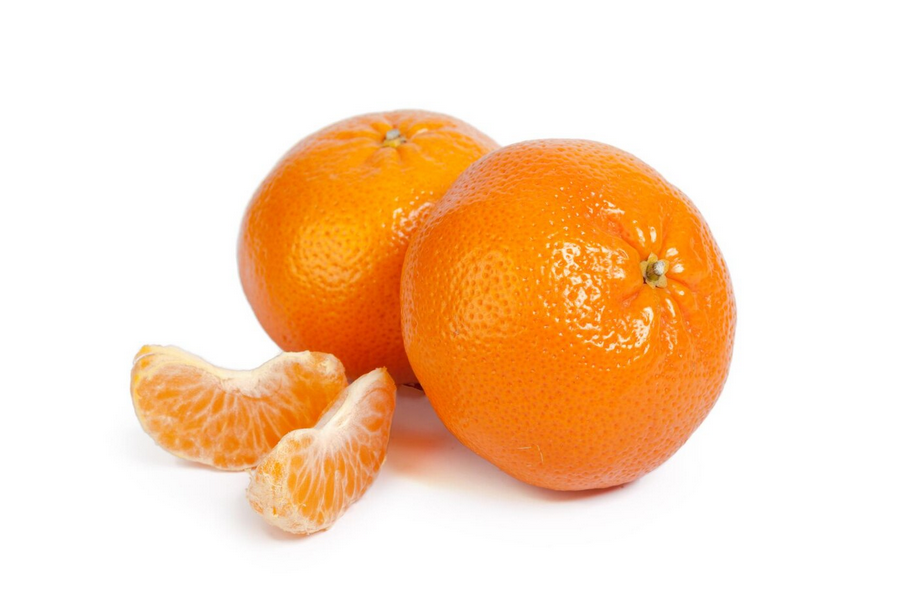
The flavor that brightens your days
Discover our wide variety of mandarins and savor their full flavor and freshness! Each one offers the perfect balance of sweetness and juiciness, ideal for enjoying any time of day. Our mandarins are carefully selected to guarantee the highest quality, providing you with a natural, healthy, and delicious experience. Come and find out why our mandarins are a favorite among those seeking freshness and authentic flavor!
The Esbal Clementine is a mutation of the Fina Clementine, originating in Sagunt (Valencia), Spain.
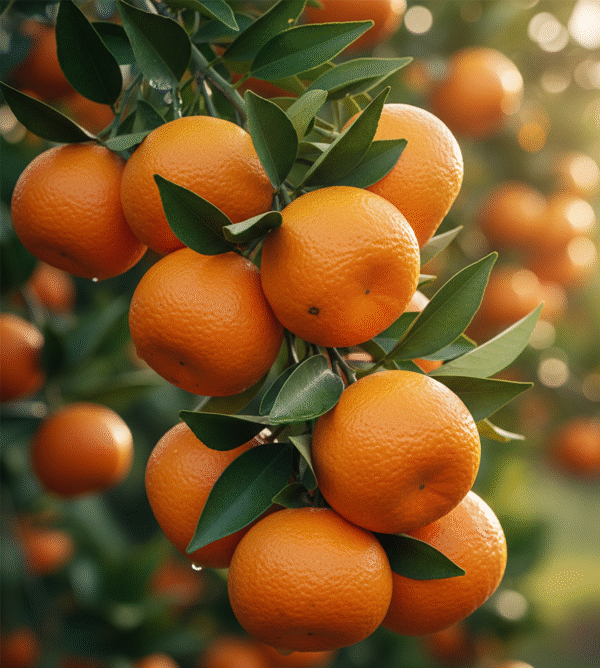
Here are some details about her:
- Origin: Spontaneous mutation of Clementina Fina.
- Tree: Medium vigor, rounded shape, without thorns (or very few).
- Fruit:
- Medium size (diameter of approximately 52 to 57 mm).
- Flattened shape.
- Deep orange rind, easy to peel.
- Very good quality pulp.
- It is practically seedless (it is parthenocarpic and self-incompatible), although it may produce seeds with cross-pollination.
- Ripening: Similar to the Oroval Clementine, or a little earlier (approximately mid-October).
- Productivity: Good, even very high, so sometimes fruit thinning is needed to achieve an adequate size.
- Sensitivity: It is susceptible to “bufado” (swollen skin) and, above all, to “pixat” (damage to the rind). Ripe fruits can be damaged by prolonged rain.
It is an interesting variety for early growing areas due to its ripening date.
The Clementina Tomatera is a highly prized variety of clementine, especially known for its intense color and earliness.
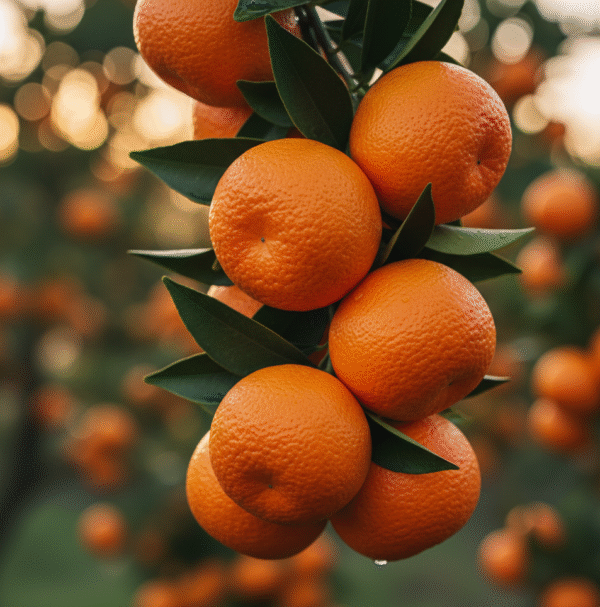
Here’s the main information:
- Origin: It is a spontaneous mutation of the Clementina Fina, selected in Burriana (Castellón, Spain).
- Name: It is called “Tomatera” because of the very intense orange color that the rind acquires when it ripens, similar to the color of a ripe tomato.
- Fruit characteristics:
- Size: Medium to large, generally larger than its parent, the Clementina Fina.
- Shape: Oblate or slightly flattened.
- Bark: Deep orange in color, developing almost suddenly in just a few days. It is relatively easy to peel..
- Pulp: Orange in color, juicy, with a good juice content and a good balance between acidity and sweetness.
- Seeds: Like other clementines, it is virtually seedless (parthenocarpic) if there is no cross-pollination.
- Tree: Vigorous, rounded in shape, with a characteristically flattened top.
- Ripening Period: This is an early variety. It ripens earlier than the Clementina Fina, becoming available from October onwards.
In summary, the Clementine Tomato variety is distinguished by its earliness and the bright and striking orange color of its skin.
The Clausellina is a very important mandarin variety because it is one of the earliest to ripen. It belongs to the Satsuma mandarin group.
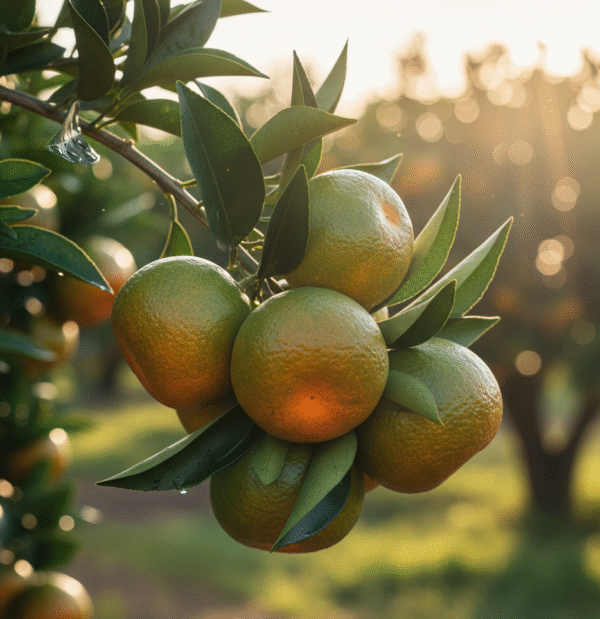
Here are its main features:
1. Group and Origin
- Varietal Group: Satsuma (Citrus unshiu). Satsumas are Japanese mandarins known for their cold tolerance and for ripening very early, often with the peel still green.
- Origin: It is a spontaneous mutation of the Satsuma ‘Owari’ variety. It was discovered in Almassora (Castellón, Spain) in 1962.
- Importance: Its main advantage is that it matures between two and three weeks earlier than its parent variety, the Owari.
2. Characteristics of the Fruit
- Shape and Size: The fruit is spherical and flattened at the poles, of medium size within the Satsuma group. Sometimes it may have a slightly pear-shaped form at the point where it joins the branch.
- Skin/Bark: It is smooth, thin, and very easy to peel, a characteristic of Satsumas. It turns orange when fully ripe, although it is often harvested when it still has green or yellowish tones.
- Pulp: It is very juicy and has a deep orange color.
- Flavor: It is sweet and has a delicate aroma. Some consider it to have a slightly inferior flavor to other later-ripening Satsumas (such as Okitsu) because, being so early, it can be less sweet if harvested too soon.
- Seeds: It is a seedless variety.
3. Harvest Time
- Season: It is a very early variety.
- Harvesting: The harvest can begin in mid-September and extends into October or early November in the Northern Hemisphere. This makes it one of the first mandarins to arrive on the market at the start of the citrus season.
In summary, the Clausellina is essential to start the mandarin campaign, being one of the first to be consumed thanks to its very early ripening.
The Clemenules Mandarin (often simply called “Nules”) is considered by many to be the “queen of mandarins” or the most important and appreciated clementine variety in Spain.
It is the benchmark clementine for its perfect balance between flavor, size and ease of consumption.
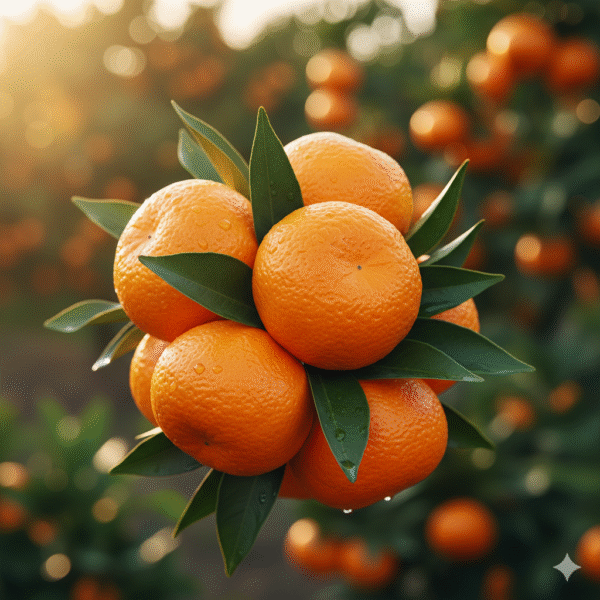
Here are its main features:
1. Origin and Group
- Variety Group: Clementine.
- Origin: It is a spontaneous mutation of the Clementina Fina, detected in the mid-1950s in the town of Nules (Castellón, Spain), hence its name.
- Other names: It is also known as Clementina de Nules, Nulesina, or Clementina Reina.
2. Characteristics of the Fruit
- Size and Shape: The Clemenules stands out for its good caliber (medium to large size) and its shape is flattened or oblate.
- Skin/Peel: Deep, bright orange in color. The skin is thin and very easy to peel, one of its most valued characteristics. It is prone to puffiness (the skin separating from the pulp) if left on the tree for too long after ripening.
- Pulp: It is tender, juicy, and melts in your mouth (leaving little residue). It offers a large amount of juice.
- Taste: Its flavor is the strong point: sweet, very pleasant and balanced, with just the right touch of acidity.
- Seeds: It is a seedless variety (or with very few seeds), unless there is cross-pollination with other closely related varieties.
3. Harvest Time
- Season: It’s a mid-season variety.
- Campaign: Harvesting typically begins in early November and extends until the end of January, covering much of the winter season.
The Iwasaki Mandarin is a very prominent variety within the Satsuma group (or Japanese mandarins), and is fundamental because it is one of those that marks the earliest start of the citrus campaign.
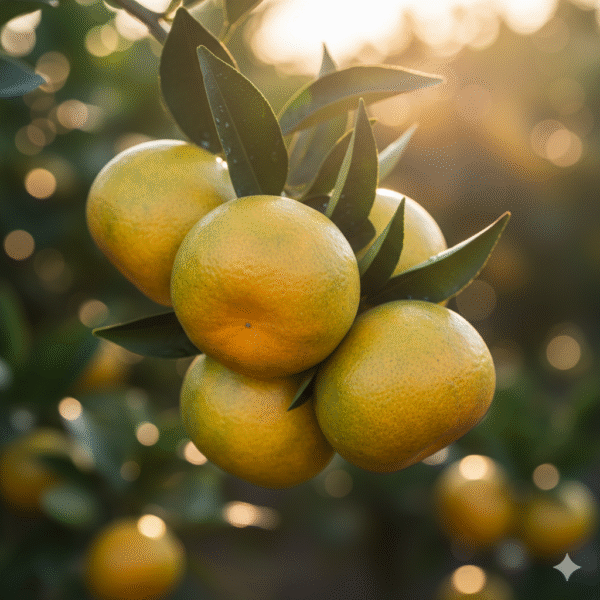
Here’s the key information about the Iwasaki:
1. Group and Origin
- Varietal Group: Satsuma (Citrus unshiu). Satsumas are mandarins known for their resistance to cold, their earliness, and their ease of peeling.
- Origin: It is a spontaneous mutation of another early Satsuma (often referred to as ‘Owari’ or ‘Okitsu’), originating in Japan.
- Purpose: It was introduced and popularized in places like Spain for its extra-early ripening characteristic (goko wase in Japanese).
2. Characteristics of the Fruit
- Size and Shape: The fruit is medium-sized (80-110 grams) and markedly oblate in shape (flattened at the poles).
- Skin/Peel: It is thin, smooth, and very easy to peel. The color at the optimal harvest time is a yellowish-orange (it is often harvested when the skin has not yet developed a deep orange color, but the flesh is already sweet).
- Pulp: It is very juicy (45-52% juice) and yellowish-orange in color.
- Taste: It is sweet, with a touch of acidity that gives it a balanced and refreshing flavor, characteristic of summer/early autumn mandarins.
- Seeds: It is a seedless variety (parthenocarpic and self-incompatible).
- Use: It is ideal for fresh consumption, especially appreciated by children and the elderly because it is easy to peel and has no seeds.
3. Harvest Time
- Season: It is one of the earliest varieties available on the market.
- Campaign: Collection can begin at the end of August and extends until the end of September.
In short, the Iwasaki is the “starting gun” for the mandarin season, offering a juicy, seedless fruit that is very easy to peel, although its flavor does not reach the sweetness of varieties that ripen later.
The Nadorcott Mandarin (whose trade name is often synonymous with Afourer) is one of the most important and valued late mandarin varieties in the world, considered a “Premium” fruit for its quality and the extension of its season.
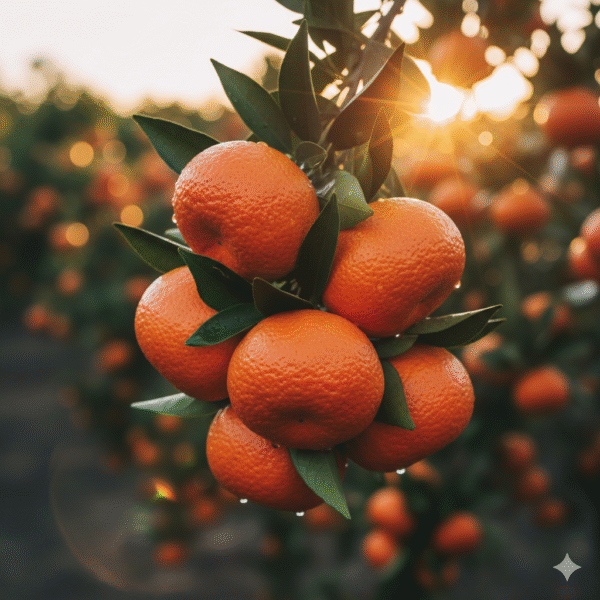
Here is detailed information about this mandarin:
1. Origin and Identification
- Varietal Group: Belongs to the group of Hybrids (or Tangor).
- Origin: It comes from a seed of the Murcott hybrid obtained at the National Institute of Agricultural Research (INRA) of Morocco, in the Nador region (hence its name).
- Names: It is known as Nadorcott, but its original name is Afourer. In some markets, it is sold under the names ClemenGold or Clemcott with guaranteed quality.
- Status: It is a licensed Protected Plant Variety, which guarantees its exclusivity and quality.
2. Characteristics of the Fruit
- Size and Shape: Medium-sized fruit (70-90 grams), distinctly flattened or oblate in shape.
- Skin/Bark: A very intense and bright reddish-orange color, which makes it very attractive. The skin is thin and slightly grainy, and is easy to peel.
- Pulp: Very tender and juicy, with a high juice content (reaching up to 60%).
- Taste: Its taste is its greatest virtue: it is exceptionally sweet and balanced, with a well-balanced acidity and a very pleasant aroma.
- Seeds: This is a parthenocarpic and self-incompatible variety, meaning it is virtually seedless without cross-pollination. However, it may produce some seeds if planted near other varieties that act as pollinators.
3. Harvesting Season
- Season: It is a late mandarin par excellence, highly valued because it allows extending the citrus season.
- Campaign: Optimal ripening begins in mid-January and, thanks to its excellent preservation capacity on the tree, it can be harvested until the end of March or even April.
In summary, the Nadorcott is a late-season mandarin highly prized for its striking color, ease of peeling, and combination of sweetness and juiciness.
The Orogrande is one of the most highly valued and popular Clementine mandarin varieties on the market, especially in Spain. It stands out for its sweet flavor and excellent quality for fresh consumption.
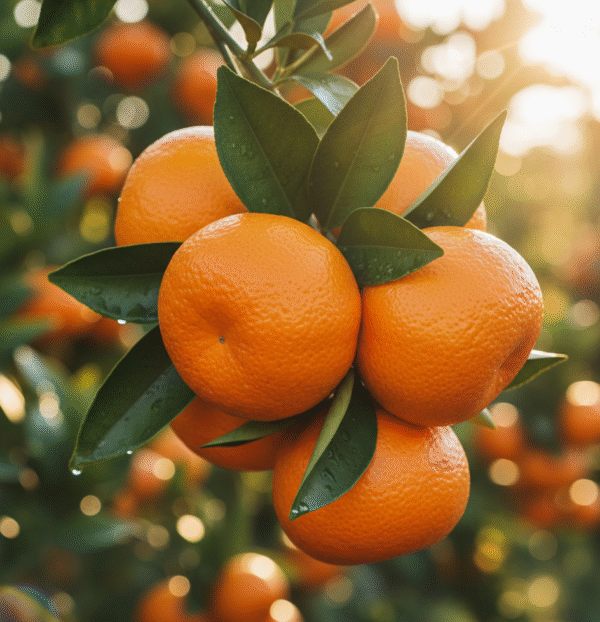
Here is detailed information about this mandarin:
1. Origin and Identification
- Group: It belongs to the Clementine group.
- Origin: It is a spontaneous mutation of the well-known Clemenules variety, detected in Murcia (Spain) in 1978.
- Similarity: It maintains many of the positive characteristics of its parent variety, Clemenules, but with some agronomic advantages.
2. Characteristics of the Fruit
- Size and Shape: It is a large mandarin (similar to or slightly larger than the Clemenules, weighing about 95-105 grams) and slightly flattened (oblate) in shape.
- Skin/Peel: Very intense and bright orange in color. It is smooth and, its great advantage, is very easy to peel, as it separates cleanly from the pulp.
- Pulp: The pulp is tender, very juicy and has a high content of excellent quality juice (between 47% and 55%).
- Flavor: It is remarkably sweet, with very low acidity and a very balanced flavor. Many consider it one of the most exquisite mandarins.
- Seeds: It is a seedless (parthenocarpic) variety, making it ideal for eating. It could only develop seeds if cross-pollinated with other citrus fruits.
3. Harvesting Season
- Season: It is a mid-season mandarin, harvested during the heart of the winter citrus season.
- Campaign: Its collection period runs from early/mid-November to mid-January.
In short, the Orogrande is an excellent choice for fresh consumption due to its combination of large size, ease of peeling, juicy pulp and a very sweet taste.
The Oronules Mandarin is one of the most prized clementine varieties and is famous for being one of the earliest of the season.
Its name is an acronym that combines “Oro” with “Nules”, referring to the town of Nules (Castellón, Spain), where it originated.
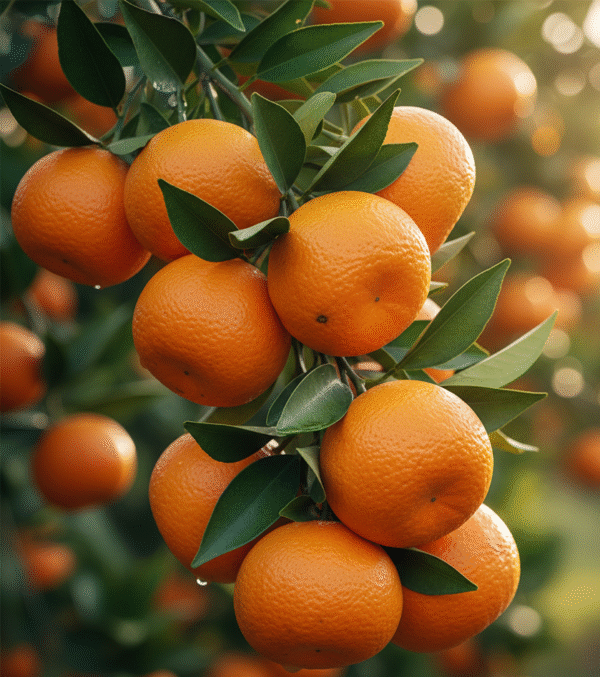
Here is a summary of its main features:
1. Origin and Group
- Variety Group: Clementine.
- Origin: It is a spontaneous mutation of the Clementina Fina, discovered in Nules (Castellón) in the 1970s.
2. Characteristics of the Fruit
- Size and Shape: It is medium-sized and has a slightly flattened shape.
- Skin/Bark: It is thin and easy to peel. Its color is a deep and very attractive reddish-orange, which it acquires early, making it visually exceptional for such an early variety.
- Pulp: Tender, very juicy and of excellent quality.
- Taste: It is highly valued for its sweet and balanced flavor, with just the right amount of acidity that makes it very pleasant to the palate.
- Seeds: It is a practically seedless (seedless) variety.
3. Harvest Time
- Season: It is an extra-early or precocious variety.
- Campaign: Harvesting begins in late September or early October and the campaign extends until the end of November approximately, marking the beginning of the quality clementine season.
The Ortanique mandarin is a very unique and highly prized citrus hybrid, especially valued for its very late ripening and intense flavor. Its name is an acronym of ORange, TANgerine, and a suffix that could come from UNIQUE or Jamaica (where it was discovered).
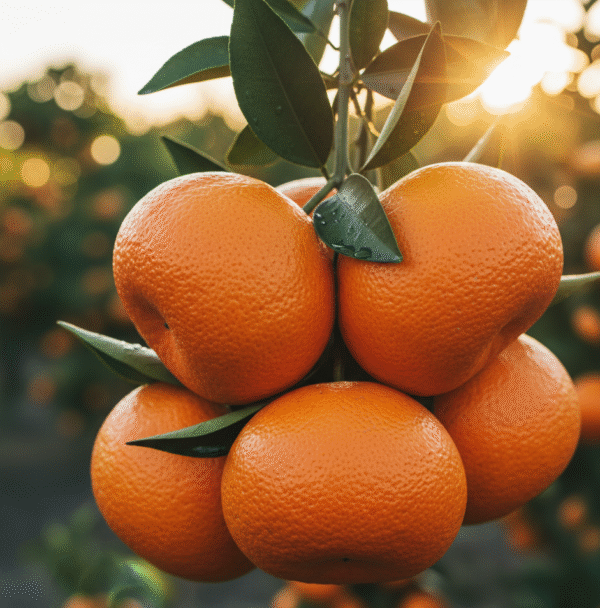
Here is a summary of its main features:
1. Origin and Group
- Varietal Group: Tangor Hybrid (believed to be a natural cross between an orange and a mandarin/tangerine).
- Origin: It was discovered in Jamaica around 1920.
2. Characteristics of the Fruit
- Size and Shape: The fruit is large (180-200 grams) and flattened (oblate) in shape, often with a small neck.
- Peel/Peel: Deep, bright, reddish-orange in color. The peel is medium to thick and difficult to peel compared to other mandarins. It adheres tightly to the pulp.
- Pulp: Intense orange in color, very juicy and with a tender texture.
- Flavor: This is its most outstanding characteristic. It has an exceptionally sweet and aromatic flavor, with a touch of acidity that gives it a perfect balance. It is considered one of the tastiest mandarins.
- Seeds: It contains seeds (between 10 and 20 per fruit), which is its main disadvantage for table consumption.
- Use: Mainly for table consumption and also for juice due to its high juiciness and good flavor, despite the seeds.
3. Harvest Time
- Season: It is a very late maturing variety.
- Campaign: Its harvesting begins at the end of February or March and can extend until May or even June, making it one of the last mandarins of the season.
- Preservation: It keeps very well both on the tree and after harvesting.
In summary, the Ortanique is a late-season mandarin with exceptional flavor, large size and attractive color, ideal for those looking for a sweet and aromatic fruit at the end of the citrus season, although you have to deal with its seeds and its more difficult-to-peel skin.
The Tangold Mandarin (also marketed as Tango or Tango Fruit) is one of the most sought-after and recognized late-season mandarins worldwide, famous mainly for its guarantee of being completely seedless under all growing conditions.
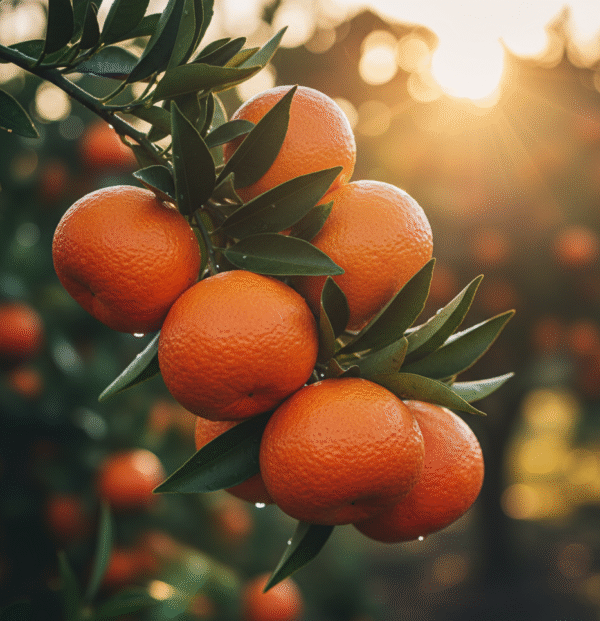
Here is a summary of its features:
1. Origin and Relationship with Nadorcott
- Varietal Group: Hybrid, derived from a Tangor.
- Origin: It was developed in California (USA) by irradiating buds of the Nadorcott (Afourer) variety. This means that Tangold is essentially a mutation of Nadorcott.
- Key difference: The goal of this induced mutation was to eliminate Nadorcott’s ability to produce seeds when pollinated by other varieties (cross-pollination). Tangold is not only parthenocarpic (seedless when self-pollinated), but it also has very low pollen viability, so it does not produce seeds even near other citrus trees.
2. Characteristics of the Fruit
- Size and Shape: Medium-small (50-60 mm), weighing around 90 grams. Its shape is flattened (oblate), similar to its parent.
- Skin/Bark: From deep orange to reddish in color, with a very soft texture and easy to peel.
- Pulp: Deep orange in color, with a fine texture and very juicy (50-54% juice).
- Flavor: Highly valued for its organoleptic quality. It is rich and sweet, with an excellent balance between sugars (high Brix) and acidity, which gives it a delicious and full flavor.
- Seeds: The defining characteristic: it is a seedless mandarin under any conditions.
3. Harvest Time
- Season: It is a late harvest variety (winter to spring).
- Campaign: It ripens in early or mid-January and can be perfectly preserved on the tree, maintaining its quality and flavor, until March or even April.
In summary, the Tangold combines the excellent flavor, color and ease of peeling of the Nadorcott, with the crucial advantage of being a 100% guaranteed seedless mandarin, making it a favorite in international markets.


